Infrared Thermography and Civil Engineering Diagnostics: The GW256 Thermal Camera Simulator Analysis
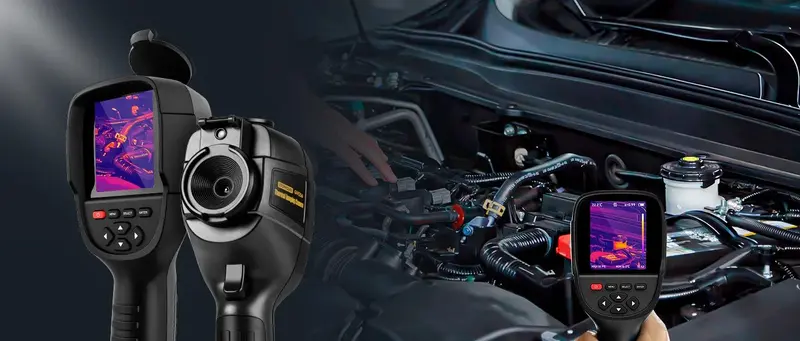
Advanced building maintenance and non-destructive testing have entered a new era of precision through digital simulation. If you want to explore the live interactive thermodynamic simulator, material emissivity calibration tools, and complete technical breakdown, visit the original article at STEM Simulator GW256 Thermal Camera Analysis. Modern thermal imaging cameras, such as the GW256 featuring a two hundred fifty-six by one hundred ninety infrared sensor, provide engineers and maintenance professionals with unprecedented capabilities to detect hidden structural defects, electrical overloads, and moisture ingress without causing physical damage to buildings.
The Physics of Infrared Radiation and the Stefan-Boltzmann Law
Infrared thermography relies fundamentally on detecting electromagnetic radiation emitted by objects possessing temperatures above absolute zero. The underlying physical principle governing this thermal emission per unit area from a blackbody surface is expressed by the Stefan-Boltzmann Law:
E equals e multiplied by sigma multiplied by T to the power of four
In this equation, E represents the radiant heat flux, e denotes the material emissivity coefficient, sigma is the Stefan-Boltzmann constant, and T represents the absolute surface temperature in Kelvin. Thermal camera simulators allow students and engineers to observe how variations in surface temperature directly alter infrared emission signatures.
The Critical Importance of Material Emissivity in Structural Audits
One of the greatest challenges in infrared thermography is accounting for surface emissivity. Different building materials absorb and radiate infrared energy at varying efficiencies. For instance, reinforced concrete typically exhibits a high emissivity rating between zero point nine one and zero point nine four, making its thermal radiation easy to capture accurately.
Conversely, polished structural steel or reflective metal surfaces have very low emissivity values, often ranging from zero point one five to zero point three zero. Failing to calibrate the emissivity setting on a device like the GW256 thermal camera introduces massive temperature reading errors, potentially leading to misdiagnosed structural failures during non-destructive testing inspections.
Thermal Bridging and Fourier Law of Heat Conduction
In civil engineering and building energy audits, identifying insulation failures is paramount. The rate of conductive heat transfer across structural elements like walls, columns, and ceilings is governed by Fourier Law of Heat Conduction:
q equals negative k multiplied by the temperature gradient
Here, q represents the heat flux rate, k denotes the thermal conductivity of the material, and the gradient represents temperature changes across component thicknesses. With the high-resolution sensor of the GW256, civil engineers easily spot thermal bridging zones where glass-fiber insulation has degraded or mortar joints have failed, preventing long-term energy loss and moisture condensation.
Detecting Hidden Moisture Leaks via Evaporative Cooling
Water infiltration and hidden pipe leaks present severe threats to structural integrity, particularly by corroding internal steel reinforcements in concrete. Moisture accumulation creates localized temperature anomalies due to evaporative cooling and the exceptionally high specific heat capacity of water.
When inspecting structures using color palettes like Ironbow or Spectra on a thermal imaging device, these cool anomalous zones stand out sharply. Early detection allows facility managers to execute targeted repairs before structural cracking or sulfate attack compromises the building.
To test the interactive thermal camera simulator, adjust emissivity parameters, and read peer-reviewed engineering references, check out the original post at STEM Simulator GW256 Thermal Camera Analysis.
Written exclusively by Ir. MD Nursyazwi at STEM Simulator. Follow on Facebook, X (formerly Twitter), Reddit, and Academia.edu.
